Tuesday, January 8, 2019

Baidu announces Apollo Enterprise, its new platform for mass-produced autonomous vehicles

Baidu made several big announcements about Apollo, its open-source autonomous vehicle technology platform, today at CES. The first is the launch of Apollo Enterprise for vehicles that will be put into mass production. The company claims that Apollo is already used by 130 partners around the world. One of its newest partners, Chinese electric vehicle startup WM Motors, plans to deploy level 3 autonomous vehicles by 2021.

Apollo Enterprise’s main product lines will include solutions for highway autonomous driving; autonomous valet parking; fully autonomous mini-buses; an intelligent map data service platform; and DuerOS (Baidu’s voice assistant) for cars.

Baidu also released Apollo 3.5, the latest version of its platform, which now supports “complex urban and suburban driving environments.” Apollo 3.5 is already used by customers including Udelv, an autonomous delivery van startup that recently partnered with Walmart to test grocery deliveries. Baidu says up to 100 self-driving vehicles based on Apollo 3.5 will be deployed in the San Francisco Bay Area and other regions in the United States.

In China, Baidu plans to launch 100 robo-taxis that will cover 130 miles of city roads in Changsha, the capital city of Hunan province. The robo-taxis will use Baidu’s V2X (i.e. vehicle-to-everything) technology, to enable them to communicate with road infrastructure, like traffic lights.

Managed By Q ends 2018 with a fresh $25 million in funding

Managed By Q, the office management platform that launched back in 2013, has today revealed that it raised an additional $25 million as a part of its Series C, led by existing investors RRE and Google Ventures, with participation from new investors DivCo West, Oxford Properties and others. The fresh capital brings the total round to $55 million.

Managed By Q launched as a all-encompassing platform for office management, offering IT support, supply inventory management, cleaning, and equipment repair. Since, the company has added a full-fledged marketplace, allowing office managers to choose vendors for various needs around the office.

But for 2019, the company is focused on tools and services.

“We want to spend 2019 putting even greater focus on the tools used by our vendors and workplace management teams, like task management tools,” said cofounder and CEO Dan Teran. “We want to build the first set of collaboration tools for the workplace team, the same way that designers use InVision and engineers use GitHub and salespeople use Salesforce. Something purposely built for the workplace team.”

Teran described tools that would allow for employee requests, work orders, task management, inventory management and budgeting to all live on the same platform.

The company hasn’t shared much by way of revenue or customer growth, but Teran told TechCrunch that the marketplace business has been doubling since it launched and is on track to continue on that trajectory. He also wrote in a company blog post that Managed by Q’s top five vendor partners have done over $1 million in business on the Managed By Q platform, and more than 30 partners will have earned over $100K on the platform in 2018.

The NY-based startup also brokered a partnership with Staples to provide office supplies to clients, and acquired Hivy and NVS to further fill out their office management suite of products.

Managed By Q has raised a total of $128.25 million, according to CrunchBase.

Amid a legal fight in LA, IBM’s Weather Company launches hyperlocal weather forecasts globally

While IBM is getting sued by the city of Los Angeles, accusing it of covertly mining user data in the Weather Channel app in the US, it’s testing the waters for another hyperlocal weather feature that — coincidentally — relies on data that it picks up from sensors on app users’ smartphones, among other devices, combined with AI at IBM’s end to help model the information.

Today at CES, the company announced new service called the Global High-Resolution Atmospheric Forecasting System — GRAF for short — a new weather forecasting system that says it will provide the most accurate weather for anywhere in the world, running every hour, and in increments of every three kilometers everywhere by way of crunching around 10 terabytes of data every day.

The new hyperlocal weather data will start to become available in 2019.

This is a key piece of news particularly for the developing world. There has been some effort already to create and use hyperlocal weather information in the US market using things like in-built sensors that can pick up information on, for example, barometric pressure — the very feature that is now the subject of a lawsuit — but there have been fewer efforts to bring that kind of service to a wider, global audience.

“If you’re a farmer in Kenya or Kansas, you will get a way better weather prediction,” said Ginny Rometty, the CEO of IBM, announcing the service today at CES.

She added that other potential end users of the data could include airlines to better predict when a plane might encounter turbulence or other patterns that could affect a flight; insurance companies managing recovery operations and claims around natural disasters; and utility companies monitoring for faults or preparing for severe weather strains on their systems.

Rometty said that the Weather Channel app’s 100 million users — and, in an estimation from Mary Glackin, the Weather Channel’s VP of business solutions, 300 million monthly active users when considering the wider network of places where the data gets used including Weather.com and Weather Underground — will be providing the data “with consent”. Data sourced from businesses will be coming from customers that are partners and are also likely to become users of the data.

That data in turn will be run through IBM’s Power9 supercomputers, the same ones used in the US Department of Energy’s Summit and Sierra  supercomputers, and modelled using suplementary data from the National Center for Atmospheric Research (NCAR).

The news represents a big step change for the Weather Company and for meteorology research, Glackin said in an interview.

“This is going to be the first significant implementation of GPUs at the Weather Company,” she told me. “The weather community has been slow to adopt to technology, but this is providing much improved performance for us, with higher resolutions and a much finer scale and focus of short-term forecasts.”

The new service of providing hyperlocal data also underscores an interesting turn for IBM as it turns its efforts to building the Weather Channel business into a more global operation, and one that helps deliver more business returns for IBM itself.

Glackin said the Weather Channel app was the most-downloaded weather app in India last year, underscoring how it, like other consumer apps, is seeing more growth outside of the US at the moment after already reaching market saturation in its home market.

Saturation, and some controversy. It’s not clear how the lawsuit in LA will play out, but the fact that it’s been filed definitely points to changing opinions and sensibilities when it comes to the use of personal data, and more generally how consumers and authorities are starting to think about how all that data that we are generating every day on our connected devices is getting used.

IBM is by far not the only company, nor the most vilified, when it comes to this issue, but at a time when the company is still trying to capitalise on the potential of how to commercialise the trove of information and customer connections in its wider business network, this will be something that will impact it as well.

Notably, Rometty closed off her keynote today at CES with a few parting words that reference that.

“As we work on these technologies, all that data that we talked about, that ownership, they belong to the user, and with their permission, we use that,” she said, adding, “These technologies also need to be open and explainable.”

Amazon reportedly acquired Israeli disaster recovery service, CloudEndure for around $200M

Amazon has reportedly acquired Israeli disaster recovery startup, CloudEndure. Neither company has responded to our request for confirmation, but we have heard from multiple sources that the deal has happened. While some outlets have been reporting that the deal was worth $250 million, we are hearing that it’s closer to $200 million.

The company provides disaster recovery for cloud customers. You may be thinking that disaster recovery is precisely why we put our trust in cloud vendors. If something goes wrong, it’s the vendor’s problem, and you would be right to make this assumption, but nothing is simple. If you have a hybrid or multi-cloud scenario, you need to have ways to recover your data in the event of a disaster like weather, a cyber attack or political issue.

That’s where a company like CloudEndure comes into play. It can help you recover and get back and running in another place, no matter where your data lives, by providing a continuous backup and migration between clouds and private data centers. While CloudEndure currently works with AWS, Azure and AWS, it’s not clear if Amazon would continue to support these other vendors.

The company was backed by Dell Technologies Partners, Infosys and Magma Venture Partners, among others. Ray Wang, founder and principal analyst at Constellation Research, says Infosys recently divested its part of the deal and that might have precipitated the sale. “So much information is sitting in the cloud that you need backups and regions to make sure you have seamless recovery in the event of a disaster,” Wang told TechCrunch.

While he isn’t clear what Amazon will do with the company, he says it will test just how open it is. “If you have multi-cloud and want your on-prem data backed up, or if you have backup on one cloud like AWS and want it on Google or Azure, you could do this today with Cloud Endure,” he said. “That’s why i’m curious if they’ll keep supporting Azure or GCP,” he added.

CloudEndure was founded in 2012 and has raised just over $18 million. It most recent investment came in 2016 when it raised $6 million led by Infosys and Magma.

Daily Crunch: The age of quantum computing is here

The Daily Crunch is TechCrunch’s roundup of our biggest and most important stories. If you’d like to get this delivered to your inbox every day at around 9am Pacific, you can subscribe here:

1. IBM unveils its first commercial quantum computer

The 20-qubit system combines the quantum and classical computing parts it takes to use a machine like this for research and business applications into a single package. While it’s worth stressing that the 20-qubit machine is nowhere near powerful enough for most commercial applications, IBM sees this as the first step towards tackling problems that are too complex for classical systems.

2. Apple’s trillion-dollar market cap was always a false idol

Nothing grows forever, not even Apple. Back in August we splashed headlines across the globe glorifying Apple’s brief stint as the world’s first $1 trillion company, but in the end it didn’t matter. Fast-forward four months and Apple has lost more than a third of its stock value, and last week the company lost $75 billion in market cap in a single day.

3. GitHub Free users now get unlimited private repositories

Starting today, free GitHub users will now get unlimited private projects with up to three collaborators. Previously, GitHub had a caveat for its free users that code had to be public if they didn’t pay for the service.

Photo credit: Chesnot/Getty Images

4. Uber’s IPO may not be as eye-popping as we expected

Uber’s public debut later this year is undoubtedly the most anticipated IPO of 2019, but the company’s lofty valuation (valued by some as high as $120 billion) has some investors feeling uneasy.

5. Amazon is getting more serious about Alexa in the car with Telenav deal

Amazon has announced a new partnership with Telenav, a Santa Clara-based provider of connected car services. The collaboration will play a huge role in expanding Amazon’s ability to give drivers relevant information and furthers the company’s mission to bake Alexa into every aspect of your life.

6. I used VR in a car going 90 mph and didn’t get sick

The future of in-vehicle entertainment could be VR. Audi announced at CES that it’s rolling out a new company called Holoride to bring adaptive VR entertainment to cars. The secret sauce here is matching VR content to the slight movements of the vehicle to help those who often get motion sickness.

7. Verizon and T-Mobile call out AT&T over fake 5G labels

Nothing like some CES drama to start your day. AT&T recently shared a shady marketing campaign that labeled its 4G networks as 5G and rivals Verizon and T-Mobile are having none of it.

IBM unveils its first commercial quantum computer

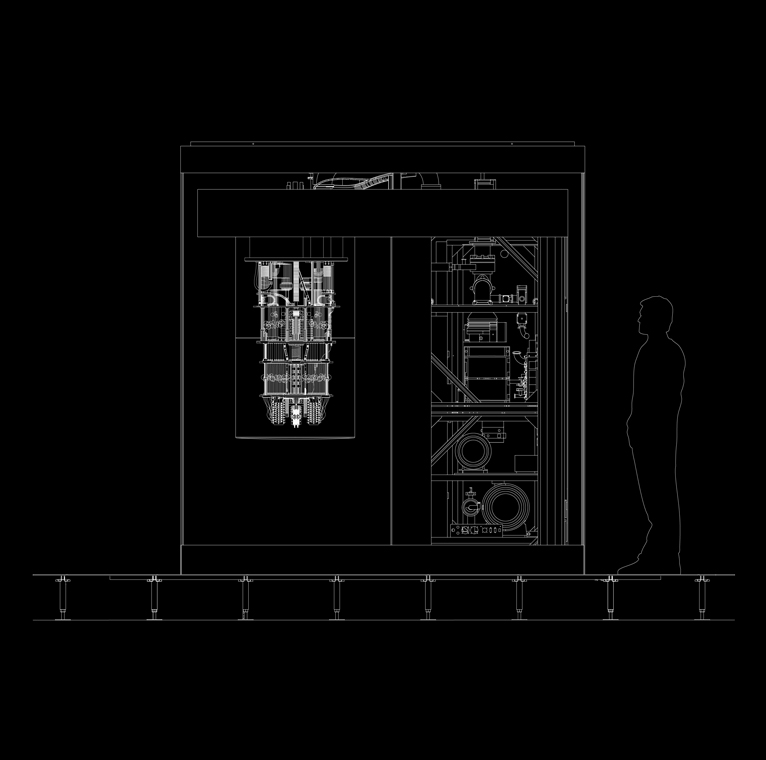
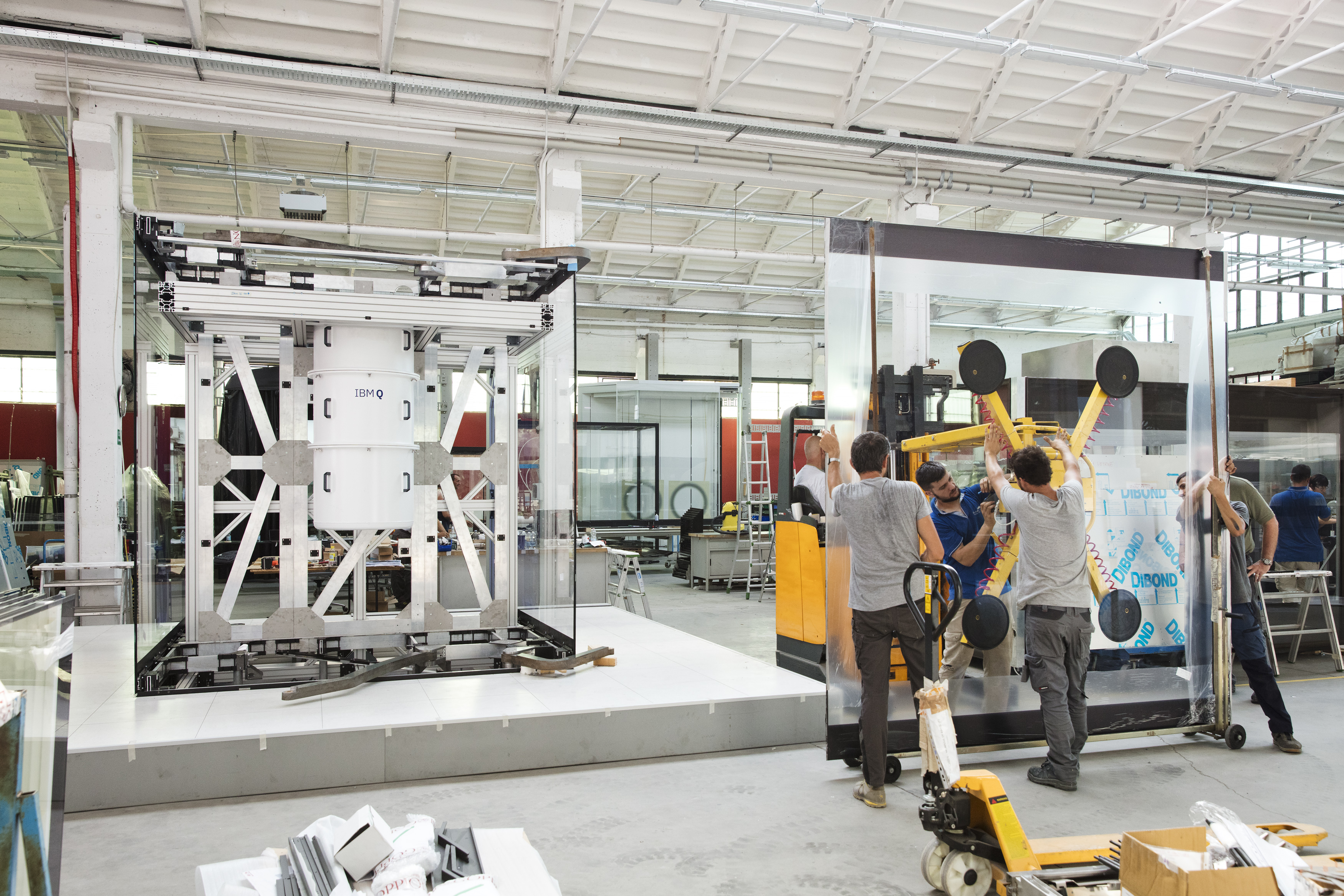
At CES, IBM today announced its first commercial quantum computer for use outside of the lab. The 20-qubit system combines the quantum and classical computing parts it takes to use a machine like this for research and business applications into a single package. That package, the IBM Q system, is still huge, of course, but it includes everything a company would need to get started with its quantum computing experiments, including all the machinery necessary to cool the quantum computing hardware.

While IBM describes it as the first fully integrated universal quantum computing system designed for scientific and commercial use, it’s worth stressing that a 20-qubit machine is nowhere near powerful enough for most of the commercial applications that people envision for a quantum computer with more qubits — and qubits that are useful for more than 100 microseconds. It’s no surprise then, that IBM stresses that this is a first attempt and that the systems are “designed to one day tackle problems that are current seen as too complex and exponential in nature for classical systems to handle.” Right now, we’re not quite there yet, but the company also notes that these systems are upgradable (and easy to maintain).

“The IBM Q System One is a major step forward in the commercialization of quantum computing,” said Arvind Krishna, senior vice president of Hybrid Cloud and director of IBM Research. “This new system is critical in expanding quantum computing beyond the walls of the research lab as we work to develop practical quantum applications for business and science.”

More than anything, though, IBM seems to be proud of the design of the Q systems. In a move that harkens back to Cray’s supercomputers with its expensive couches, IBM worked with design studios Map Project Office and Universal Design Studio, as well Goppion, the company that has built, among other things, the display cases that house the U.K.’s crown jewels and the Mona Lisa. IBM clearly thinks of the Q system as a piece of art and, indeed, the final result is quite stunning. It’s a nine feet tall and nine feet wide airtight box, with the quantum computing chandelier hanging in the middle, with all of the parts neatly hidden away.

If you want to buy yourself a quantum computer, you’ll have to work with IBM, though. It won’t be available with free two-day shipping on Amazon anytime soon.

In related news, IBM also announced the IBM Q Network, a partnership with ExxonMobil and research labs like CERN and Fermilab that aims to build a community that brings together the business and research interests to explore use cases for quantum computing. The organizations that partner with IBM will get access to its quantum software and cloud-based quantum computing systems.

Monday, January 7, 2019

HQ2 fight continues as New York City and Seattle officials hold anti-Amazon summit

The heated debate around Amazon’s recently announced Long Island City “HQ2” is showing no signs of cooling down.

On Monday morning, the Retail, Wholesale and Department Store Union (RWDSU) hosted a briefing in which labor officials, economic development analysts, Amazon employees and elected New York State and City representatives further underlined concerns around the HQ2 process, the awarded incentives, and the potential impacts Amazon’s presence would have on city workers and residents.

While many of the arguments posed at the Summit weren’t necessarily new, the wide variety of stakeholders that showed up to express concern looked to contextualize the far-reaching risks associated with the deal.

The day began with representatives from New York union groups recounting Amazon’s shaky history with employee working conditions and questioning how the city’s working standards will be impacted if the 50,000 promised jobs do actually show up.

Two current employees working in an existing Amazon New York City warehouse in Staten Island provided poignant examples of improper factory conditions and promised employee benefits that never came to fruition. According to the workers, Amazon has yet to follow through on shuttle services and ride-sharing services that were promised to ease worker commutes, forcing the workers to resort to overcrowded and unreliable public transportation. One of the workers detailed that with his now four-hour commute to get to and from work, coupled with his meaningfully long shifts, he’s been unable to see his daughter for weeks.

Various economic development groups and elected officials including, New York City Comptroller Scott Stringer, City Council Speaker Corey Johnson, City Council Member Jimmy Van Bramer, and New York State Senator Mike Gianaris supported the labor arguments with spirited teardowns of the economic terms of the deal.

Like many critics of the HQ2 process, the speakers’ expressed their beliefs that Amazon knew where it wanted to bring its second quarters throughout the entirety of its auction process, given the talent pool and resources in the chosen locations, and that the entire undertaking was meant to squeeze out the best economic terms possible. And according to City Council Speaker Johnson, New York City “got played”.

Comptroller Stringer argued that Amazon is taking advantage of New York’s Relocation and Employment Assistance Program (REAP) and Industrial and Commercial Abatement Program (ICAP), which Stringer described as outdated and in need of reform, to receive the majority of the $2 billion-plus in promised economic incentives that made it the fourth largest corporate incentive deal in US history.

The speakers continued to argue that the unprecedented level of incentives will be nearly impossible to recoup and that New York will also face economic damages from lower sales tax revenue as improved Amazon service in the city cannibalizes local brick & mortar retail.

Fears over how Amazon’s presence will impact the future of New York were given more credibility with the presence of Seattle City Council members Lisa Herbold & Teresa Mosqueda, who had flown to New York from Seattle to discuss lessons learned from having Amazon’s Headquarters in the city and to warn the city about the negative externalities that have come with it.

Herbold and Mosqueda focused less on an outright rejection of the deal but instead emphasized that New York was in a position to negotiate for better terms focused on equality and corporate social responsibility, which could help the city avoid the socioeconomic turnover that has plagued Seattle and could create a new standard for public-private partnerships.

While the New York City Council noted it was looking into legal avenues, the opposition seemed to have limited leverage to push back or meaningfully negotiate the deal. According to state officials, the most clear path to fight the deal would be through votes by the state legislature and through the state Public Authorities Control Board who has to unanimously approve the subsidy package.

With the significant turnout seen at Monday’s summit, which included several high-ranking state and city officials, it seems clear that we’re still in the early innings of what’s likely to be a long battle ahead to close the HQ2 deal.

Amazon did not return requests for immediate comment.